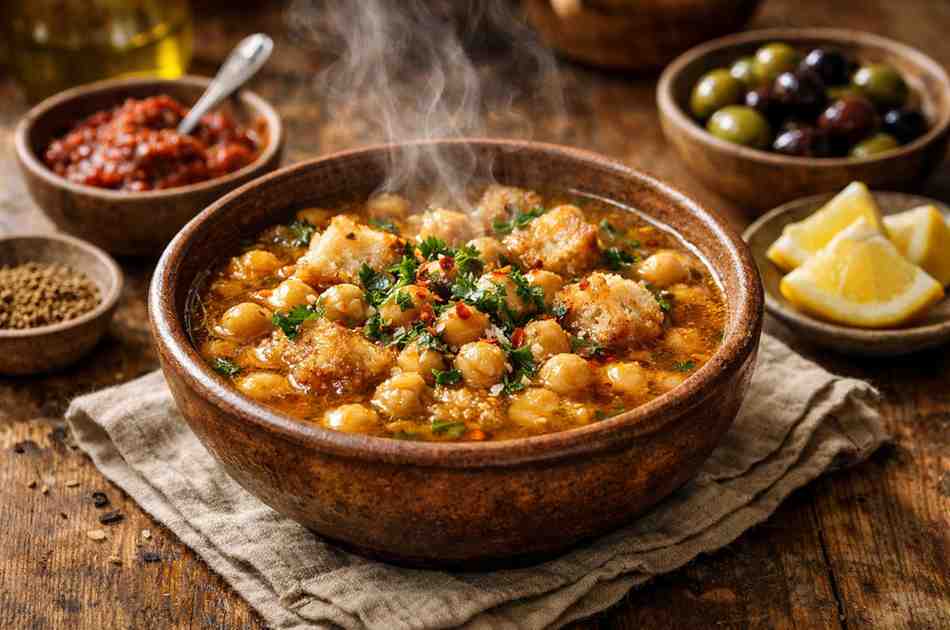
Among the many treasures of Tunisian cuisine, Lablabi stands out as a humble yet deeply satisfying dish. Often enjoyed as a breakfast staple or a quick street-side meal, this chickpea soup embodies warmth, comfort, and bold Mediterranean flavors. Rich in tradition and flavor, Lablabi is more than just a soup—it’s a culinary story of Tunisia’s culture and ingenuity.
Origins of Lablabi
Lablabi is believed to have originated in the northern regions of Tunisia, particularly in the city of Tunis. Traditionally, it was a simple, hearty meal designed to fuel workers and families through the day. Over time, it evolved into a beloved street food, combining affordability, nourishment, and bold flavors that resonate with locals and travelers alike.
Key Ingredients That Define Lablabi
At its core, Lablabi is simple yet vibrant, featuring a few staple ingredients:
- Chickpeas: The heart of the soup, providing protein, texture, and earthy flavor.
- Broth: Typically a garlic- and cumin-infused broth that adds warmth and depth.
- Spices: Harissa (a spicy chili paste), cumin, and paprika give Lablabi its signature kick.
- Bread: Stale bread pieces soak in the broth, making each bowl hearty and filling.
- Optional Toppings: Hard-boiled eggs, olives, capers, or a drizzle of olive oil can enhance flavor and texture.
How Lablabi Is Made
Making Lablabi is straightforward but relies on layering flavors carefully:
- Cook the Chickpeas: Soak and boil chickpeas until tender, creating a creamy foundation for the soup.
- Prepare the Broth: Infuse water with garlic, cumin, and other spices for a fragrant base.
- Assemble the Soup: Place chunks of bread in bowls, ladle the hot chickpea broth over them, and let the bread absorb the flavors.
- Add Toppings: Garnish with eggs, harissa, olive oil, or fresh herbs for a satisfying finish.
Why Lablabi Is So Comforting
Lablabi is the definition of comfort food: warm, filling, and bursting with flavor. The combination of soft chickpeas, spicy broth, and soaked bread creates a meal that is both hearty and nurturing. It’s perfect for chilly mornings, late-night cravings, or anytime you crave a taste of Tunisian tradition.
Lablabi in Modern Cuisine
While rooted in tradition, Lablabi has inspired chefs to innovate. Some add vegetables like spinach or carrots, while others experiment with alternative breads or toppings. Yet, the soul of Lablabi remains—simple ingredients, bold flavors, and a focus on nourishment.
Final Thoughts
Lablabi is more than just a soup; it’s a symbol of Tunisia’s culinary heart. It combines history, culture, and comfort in a single bowl. Each spoonful tells a story of tradition, resourcefulness, and the joy of simple, flavorful food. For anyone seeking an authentic, heartwarming experience from North African cuisine, Lablabi is an unmissable delight.