A Simple AI Writing Workflow: Outline → Draft → Tighten
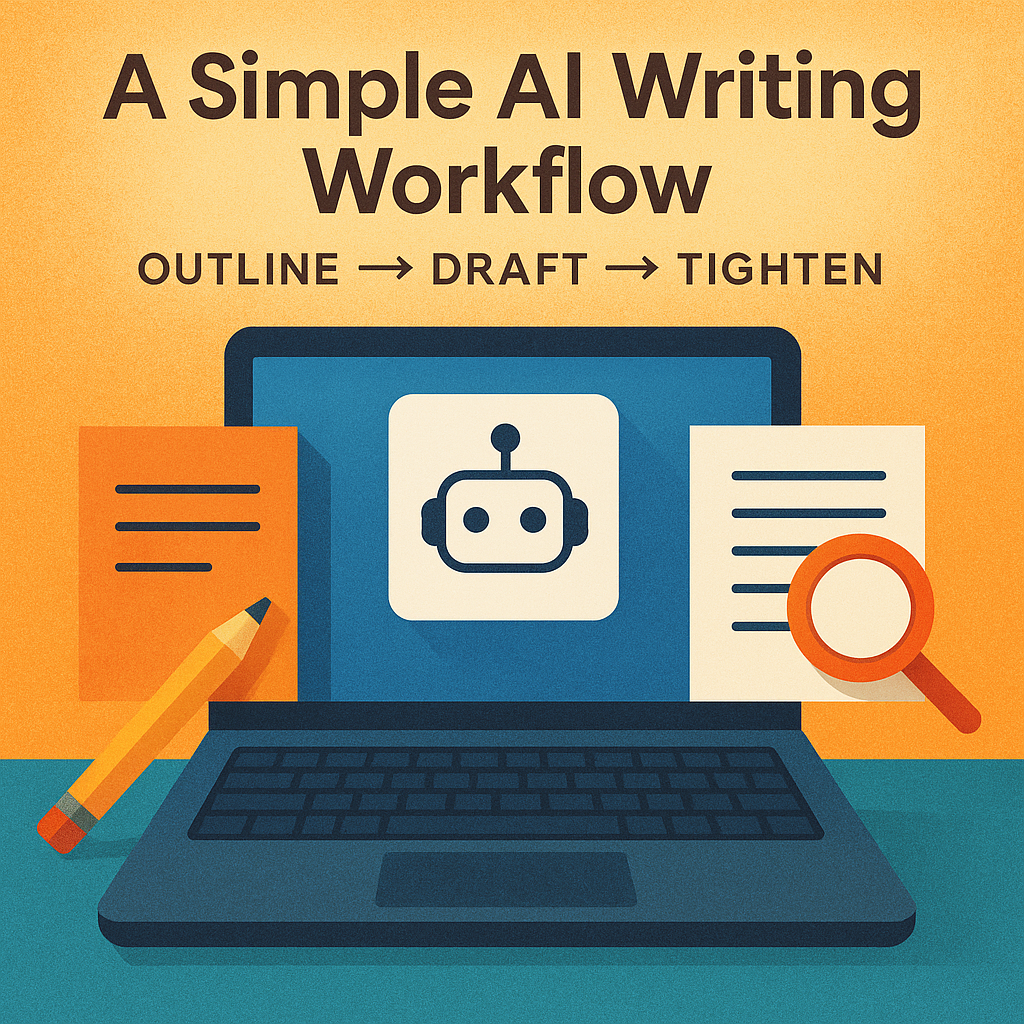
AI writing works best when you use it like a structured collaborator. If you ask for a perfect final draft in one prompt, you’ll usually get something generic. If you guide it through stages—outline, draft, tighten—you get clarity without losing your voice.
Stage 1: outline. Give the topic, audience, and tone, then ask for three different outlines. Pick the one that matches your intent. This step is underrated: a good outline is 60% of a good article.
Stage 2: draft in chunks. Instead of “write the whole thing,” ask for one section at a time: intro, key point #1, key point #2, conclusion. You can correct direction early, and the writing stays more consistent.
Stage 3: tighten. Take the draft and ask for edits that are mechanical, not creative: “shorten by 15%,” “remove repetition,” “make sentences more concrete,” or “add one example per section.” This is where AI shines—iteration without ego.
One useful prompt is: “Keep meaning, increase specificity.” It forces the model to replace vague claims with concrete steps, examples, and measurable outcomes.
To keep your voice, add a final human pass. Read it out loud and fix rhythm, remove filler, and add specific details only you know (numbers, names, lessons learned). Your credibility lives in specifics.
A practical workflow: (1) outline options, (2) draft section-by-section, (3) one clarity edit, (4) one voice edit, (5) final proofread. You’ll write faster, and the result will still feel like you—just sharper.
If you publish online, add one last check: headlines and first two sentences. That’s what people actually read first. Make them concrete, promise a clear payoff, and the rest of the article becomes easier to follow.
- Ask for 3 outlines first.
- Draft one section at a time.
- Do a final “shorten by 15%” pass.